
Hurricane impact windows are window assemblies designed and tested for impact resistance, using laminated glass and a compatible frame, hardware, and installation system. Florida homeowners consider them to help protect openings during severe weather, reduce the need to put up separate protection before a storm, and address comfort or aging-window concerns. They are not required everywhere in Florida, and a product that works for one opening or location may not be appropriate for another. Before comparing prices, confirm local requirements, ask for approval documents for the exact product, and compare the full installation scope. The best decision is not simply “impact glass or no impact glass”: it is whether a documented, properly installed system fits your home, budget, and local requirements.
What hurricane impact windows are and why homeowners consider them
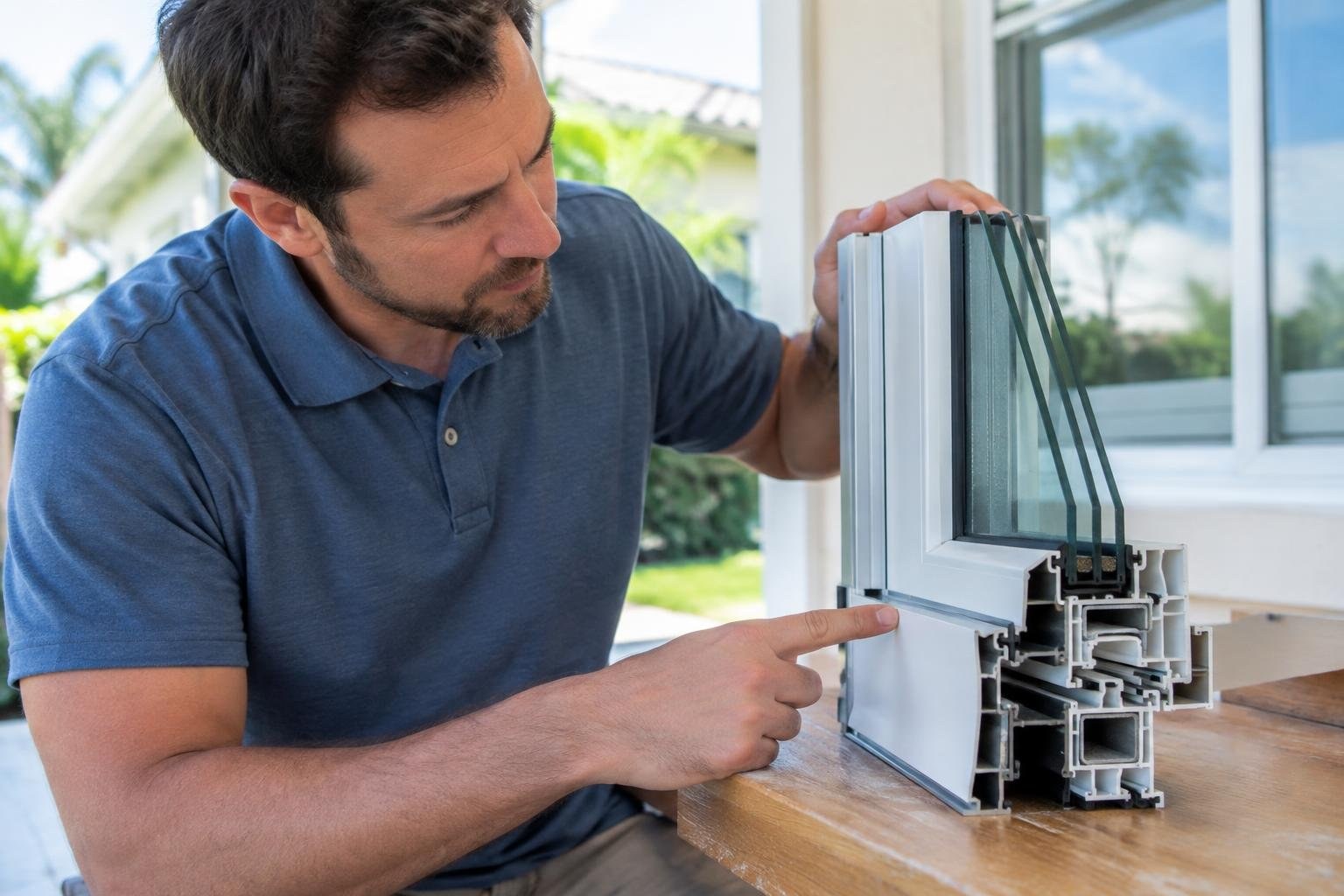
Impact windows are designed to help protect a building’s window openings during severe weather. The term refers to a complete assembly, not just a pane of special glass. A homeowner comparing products should consider the glazing, frame, hardware, anchoring, product approval, and how the unit will be installed in the existing opening.
They matter because windows are part of the home’s exterior envelope. Replacing them can be a substantial project, and the selected system may affect storm preparation, comfort, appearance, and future maintenance. It is also a decision shaped by local rules: impact windows are not required everywhere in Florida.
How impact windows work
Laminated glass is made with glass bonded to an interlayer. If the glass cracks, the interlayer is intended to help hold fragments together. The window still needs a suitable frame and a secure connection to the building; an impact-resistant glass description alone does not establish that the complete installation is appropriate.
Impact testing evaluates how a window assembly responds to specified impacts. One large-missile test example uses a 9-pound 2-by-4 launched at 50 feet per second. Confirm which test standard applies to the exact product and project. Ask the provider for documentation identifying the exact product and configuration being proposed, rather than relying on a general statement that a window is “hurricane rated.”
Options and tradeoffs: impact windows, shutters, and film
The principal decision is often between impact windows and a separate protection system, such as shutters. Impact windows stay in place as part of the home’s regular windows. Shutters are a different approach and may involve a separate installation or deployment step. Compare the total work and the practical routine you are willing to maintain, not just the product descriptions.
| Option | What to evaluate | Important limitation |
|---|---|---|
| Impact windows | Product approval, frame, glazing, installation, appearance, and warranty | Cost and suitability depend on the home and approved configuration |
| Shutters | Coverage of openings, installation, storage or operation, and upkeep | Requirements and convenience vary by shutter type and property |
| Hurricane film | What the product is designed to do and whether it suits the opening | Not the same product as an impact window |
Florida PACE cautions that tape does not strengthen a window and can make breakage more dangerous. Its guidance distinguishes hurricane film, which is engineered to improve shatter resistance across the surface, from tape. Do not treat either tape or film as interchangeable with an approved impact-window assembly.
Impact window cost and estimate factors
There is no single project price that can be responsibly applied to every Florida home. A useful estimate needs to reflect the actual home and the exact work proposed.
Ask the contractor to separate product and installation details and identify what is included. Clarify whether the estimate accounts for removing existing windows, preparing openings, addressing concealed damage if discovered, finishing disturbed areas, permits, disposal, and any optional upgrades. These are questions to resolve in writing, not assumptions to make from a headline price.
What can affect the estimate?
- Number, dimensions, shapes, and configurations of the openings.
- Selected product, glazing features, frame, and finishes.
- Existing window and opening condition and any additional work uncovered during removal.
- Access, installation complexity, permit steps, and the project’s location.
- Whether related exterior work is included or contracted separately.
How to control cost without compromising the work
Get more than one itemized proposal based on comparable products and scope. Ask what is optional, what could change the price, and how added work will be approved. Do not choose a bid solely because it is lowest, and do not remove necessary approvals or installation steps just to reduce the quote.
When to consider repair or replacement
Consider replacement when existing windows are part of a larger maintenance or storm-protection decision, or when you are already planning to address aging openings. A consultation can help determine whether a window, its frame, or the surrounding opening needs attention. Do not assume that a problem with one component requires replacing every window in the home.
Before choosing replacement, ask whether a repair is feasible and whether it would address the actual problem. Compare the condition of each opening, the proposed replacement scope, and the performance and approval documentation for the new assembly. Where a window is damaged or does not operate as intended, have it assessed rather than relying on a temporary fix as a substitute for an appropriate repair.
Impact windows can be one part of a broader hurricane-protection plan, but no window choice should be treated as a guarantee against storm damage. Some insurance policies or high-risk situations may have additional protection conditions. Confirm your own policy and local requirements directly.
Signs it may be time to assess your windows
Use a practical assessment checklist before requesting proposals. The following observations do not by themselves establish that impact windows are needed, but they are reasons to investigate the condition and protection of the openings:
- A window is visibly damaged or does not operate as intended.
- You are unsure what storm protection covers a particular opening.
- You are planning a window replacement and want to check local impact-protection requirements before selecting a product.
- You have been told that a product is approved but have not seen documentation for the exact configuration.
- You are relying on tape or another temporary measure and need to understand its limits.
Do not wait until a storm is approaching to begin researching a project. A rushed decision makes it harder to compare products, approvals, scope, and installation plans.
What to expect from assessment through installation
Begin with an assessment of the existing openings and the homeowner’s goals. Then compare product options and written estimates. Before work begins, establish who handles any required permit steps, how the home will be prepared, what removal and installation include, and how additional work will be approved.
During installation, the contractor should follow the product and project requirements that apply to the approved assembly. Ask how the crew will protect the work area, address the existing openings, and document the completed work. At the end, review operation, finish, cleanup, product paperwork, warranty information, and any required inspection or follow-up.
Timing varies with product selection, project scope, local approval steps, existing conditions, and scheduling. Ask for a written sequence with expected ordering, permit-related steps, installation, and closeout. Do not rely on a promised completion date that excludes those steps.
Permits, product approvals, and safety checks
Impact-window replacement involves product selection, installation, and potentially permitting or work on exterior openings. Whether a permit is required and what documentation applies depend on the project and jurisdiction. Contact the local building department before work begins; do not assume a contractor’s general statement settles requirements for your address.
Request the approval documentation for the exact product and configuration. Confirm that it matches the proposed opening and installation. Ask who will obtain permits, coordinate inspections if applicable, and provide the closeout documents. Verify the contractor’s relevant license and insurance independently, and make sure the written agreement states who is responsible for each step.
For storm readiness, do not assume impact windows satisfy every insurance condition. Some policies or high-risk locations may call for additional protection. Contact your insurer to confirm what your policy requires.
How to choose a qualified window provider
Window replacement is not a good project to judge by a product label or a single low bid. Ask prospective providers questions such as:
- What exact product, frame, glass, and configuration are you proposing?
- Can I review its approval documentation for the openings in my home?
- Who verifies that the product is appropriate for my address and project?
- What does the price include, and what is excluded?
- Does the scope include removal, disposal, and work around the openings?
- How will you handle concealed damage or a change in scope?
- Who handles permits and any required inspections?
- Who performs the installation, and will subcontractors be used?
- Can you provide current proof of relevant licensing and insurance?
- What product and workmanship warranties apply, and what do they exclude?
- What is the expected schedule, including ordering and permit steps?
- What payment schedule and cancellation or change-order terms will be in the contract?
- What documents will I receive at project completion?
Get clear answers in a signed written agreement. Check references and reviews, but also compare the actual products, approvals, scope, and warranty language. A provider’s verbal assurance is not a substitute for documentation.
Warranties, contracts, and contractor red flags
Read the manufacturer’s product warranty and the installer’s workmanship warranty separately. Check what is covered, how long coverage lasts, whether registration is needed, and what conditions or maintenance duties could affect coverage. Confirm who handles a claim and whether labor, removal, or replacement work is included; do not assume that a product warranty covers installation.
Before signing, make sure the contract identifies the product and installation scope, price and payment schedule, permit responsibility, change-order process, timeline, cleanup, and warranty documents. Avoid large unexplained upfront payments, pressure to sign immediately, vague scope, cash-only demands, missing insurance or licensing evidence, and refusal to clarify permit responsibility.
Low-E glass, heat, and comfort
South Florida’s hot conditions make glazing selection relevant to comfort as well as storm protection. Low-E coatings are designed to reduce solar heat gain while allowing natural light through; they may help improve comfort and reduce cooling demand during the hottest months. Ask for the actual glazing specifications and compare them rather than assuming every impact window has the same energy characteristics.
Ask the provider to explain the product’s documented features in relation to your home, and do not treat possible comfort or cooling benefits as guaranteed utility-bill savings.
Local rules and South Florida considerations
Florida-wide statements can be misleading because impact-window requirements are not universal across the state. Location and project details matter. Before ordering, check with the local building department about the rules and approved product documentation relevant to your project. Also verify any separate requirements with your insurer.
For a South Florida home, evaluate heat and solar exposure when comparing glazing. For storm protection, assess each opening and the protection system as a whole rather than assuming that one product or a general label covers every condition. Ask the contractor to explain how the proposed configuration applies to each opening.
Is upgrading to impact windows worth it?
Impact windows may be worthwhile when a homeowner wants an in-place window protection option, is already replacing windows, and can verify that the proposed assembly and installation address the relevant project requirements. The case is less clear when the decision is based only on a general promise of insurance savings, resale value, or energy-bill reduction. Those outcomes depend on the home, policy, product, and market, and should not be assumed.
Weigh the full written cost against the condition of existing windows, the alternatives, the amount of work involved, and how long you expect to remain in the home. Compare convenience and appearance with the maintenance and operating steps of other protection systems. If the estimate includes upgrades, ask what each one adds and whether it is essential to the project.
Related projects to evaluate with window replacement
Window work can affect adjacent finishes and may overlap with other exterior improvements. Before approving the window scope, ask whether any of these projects should be assessed at the same time:
- Exterior trim and finishes: Window removal or installation may touch adjacent areas. Identify who restores disturbed finishes and whether that work is included.
- Siding or exterior wall work: If exterior work is planned, coordinate sequencing and responsibility at the openings so the window and wall scopes do not leave gaps in coverage.
- Doors: If you are evaluating storm protection for the whole home, ask whether doors are addressed separately. A window proposal does not automatically cover doors.
- Other hurricane protection: Compare coverage across all relevant openings and identify any areas not included in the window project.
- Glazing and comfort upgrades: Discuss Low-E options while selecting the window, rather than assuming they can be added later without changing the product.
Have each trade’s scope, sequence, and price written separately, and confirm which project must happen first with the contractors involved.
Common homeowner mistakes to avoid
Common mistakes include choosing by price without comparing the same scope; assuming impact windows are required everywhere in Florida; accepting a general “hurricane-rated” claim without exact product documentation; overlooking frame and installation details; treating tape as storm protection; assuming film is equivalent to an impact window; and believing that one window project automatically satisfies insurance requirements.
Other avoidable problems include signing before permit responsibility is clear, accepting verbal warranty promises, overlooking exclusions and change-order terms, failing to coordinate related exterior work, or scheduling the project too close to the period when you want it complete. Ask questions, verify documents, and keep the final agreement and approvals together.
Final homeowner checklist
Before signing a contract, check each item:
- Identify which openings need attention and why.
- Compare repair, replacement, impact windows, and other protection options.
- Confirm local requirements with the building department and check policy conditions with the insurer.
- Review the exact product approvals and proposed configuration.
- Get comparable written estimates with inclusions, exclusions, and possible added work explained.
- Verify licensing, insurance, permit responsibilities, and warranty terms.
- Agree on payment, schedule, change orders, cleanup, and closeout documents.
- Coordinate related exterior work and confirm project sequence.
- At completion, review operation, finish, paperwork, warranty information, and any required follow-up.
Frequently asked questions
What are hurricane impact windows?
Impact windows use laminated glass designed to remain bonded to an interlayer when damaged, helping keep the glass together rather than falling apart in loose pieces. The complete window assembly matters: frame, glass, hardware, anchoring, and installation all have a role. Ask the installer for the approval documentation for the exact product and configuration proposed for your home.
Are impact windows required everywhere in Florida?
No. Impact windows are not required everywhere in Florida. Requirements depend on the project, location, and applicable code provisions. Ask the local building department whether a permit is required and which product approvals apply to your address and openings. Do not rely on a general statewide claim to determine the rules for a specific property.
How much do hurricane impact windows cost in Florida?
There is no single reliable project price for every Florida home. The total depends on the number and dimensions of openings, product selection, existing conditions, installation scope, and any needed repairs or related work. Request a written, itemized estimate after an on-site assessment, and compare the same scope and product details across proposals.
Are impact windows better than hurricane shutters?
There is no single best option for every home. Impact windows remain in place, while shutters may involve a separate installation or deployment step. Compare product approval, opening coverage, installation, upkeep, convenience, and total project cost for your home.
Does putting tape on windows protect them during a hurricane?
No. Tape does not strengthen a window, and the Florida PACE guidance warns that tape can make breakage more dangerous. Hurricane film is a different product intended to improve shatter resistance across the glass surface, but it is not the same as a tested impact window. Ask a qualified provider what each option is designed and approved to do.
What should I ask an impact-window contractor?
Ask for the exact product approval and verify that it applies to the proposed size, configuration, and location. Confirm who obtains permits, what the installation includes, whether opening preparation or repairs are extra, and what product and workmanship warranties cover. Request proof of relevant licensing and insurance and get all scope, exclusions, and payment terms in writing.
Do impact windows mean I never need shutters?
Not necessarily. Whether additional protection is appropriate depends on the proposed system, the property, and any conditions in your insurance policy. Some policies or high-risk locations may require additional protection. Confirm directly with your insurer and local building department.
Do impact windows help with heat and energy use?
Low-E coatings can reduce solar heat gain while allowing natural light into the home, which may support comfort and reduce cooling demand in hot weather. Actual performance depends on the product and installation. Compare the proposed glazing specifications and ask how the selection balances daylight, heat gain, and your needs.
How long does it take to replace windows with impact windows?
Start well before the period when you want the work completed. The schedule depends on the assessment, product selection, availability, permit requirements, opening conditions, and installation scope. Ask each provider for a written schedule that separates ordering, permit-related steps, installation, inspection, and any follow-up work.
Are there Florida rebates or grants for impact windows?
Possibly, but do not assume eligibility, funding, or current availability. Program rules and funding can change. Check official program information and your local utility or government sources, and get written confirmation of eligibility before including an incentive in your budget.
People Also Ask
What should I review at the end of an impact-window installation?
Review window operation, adjacent finishes, cleanup, product paperwork, and warranty information with the installer. Confirm the status of any required inspection or follow-up and keep the closeout records with the contract.
How do I coordinate window replacement with siding or exterior trim work?
Ask each contractor to define the scope around the openings and identify who restores disturbed finishes. Record the work sequence and responsibilities so the window and exterior-work scopes do not leave gaps.
Does a window proposal automatically include doors?
No. Ask whether doors and any other openings are covered by a separate scope. Review protection across the home rather than assuming a window-only proposal includes every opening.
What should a window change-order process explain?
Ask how concealed damage, additional opening preparation, or other scope changes will be documented, priced, and approved. Confirm the payment and schedule effects in writing before agreeing to added work.
What is the difference between product and workmanship warranty coverage?
Review the manufacturer's product warranty and the installer's workmanship warranty separately. Ask who handles each type of claim and whether labor, removal, or replacement work is covered; do not assume the product warranty covers installation.
Hurricane impact windows can combine everyday window functions with a tested form of storm protection, but the right choice depends on the home, applicable local requirements, product approval documents, and installation quality. Compare complete written proposals, verify how each product is approved for its intended opening, and check with your local building department and insurer before assuming one upgrade satisfies every requirement.
Your next step
Explore home management options and providers at HouseManagers.com.
Last reviewed and updated November 1, 2026 by the Housemanagers.com Editorial Team.
Sources
- Are Impact Windows Required in Florida? Code, HVHZ & Homeowner Guide
- The Ultimate Guide to Impact Windows in Florida | NW&D
- How to Protect Windows During a Hurricane | Florida PACE
- Hurricane Impact Windows Buying Guide: What South Florida Homeowners Need to Know
- Hurricane Impact Windows in Florida | Fixr.com | Fixr.com
- Hurricane Protection for South Florida Homes: Complete Guide for 2026
- Hurricane Impact Windows: The Ultimate Guide to Protection, Savings, and Value for Florida Homeowners – Window Guys of Florida Blog
- Hurricane Impact Windows: Complete Guide for Florida Homeowners 2026 | Window Guys of Florida
- Impact Windows in Vero Beach: Cost, Benefits & Hurricane Protection