
A seasonal home can sit empty for weeks or months, then need dependable heating or cooling as soon as you arrive. That makes HVAC upkeep less about following a one-size-fits-all calendar and more about preparing the system for the periods when it will be used. A clogged filter can restrict airflow, and seasonal maintenance sources recommend checking filters and arranging equipment checks before peak heating or cooling use. This guide explains what to plan, what to ask a provider, and how to avoid paying for work you do not understand. Because maintenance needs vary by system and location, confirm recommendations for your specific equipment rather than relying on a generic checklist.
What seasonal HVAC maintenance includes
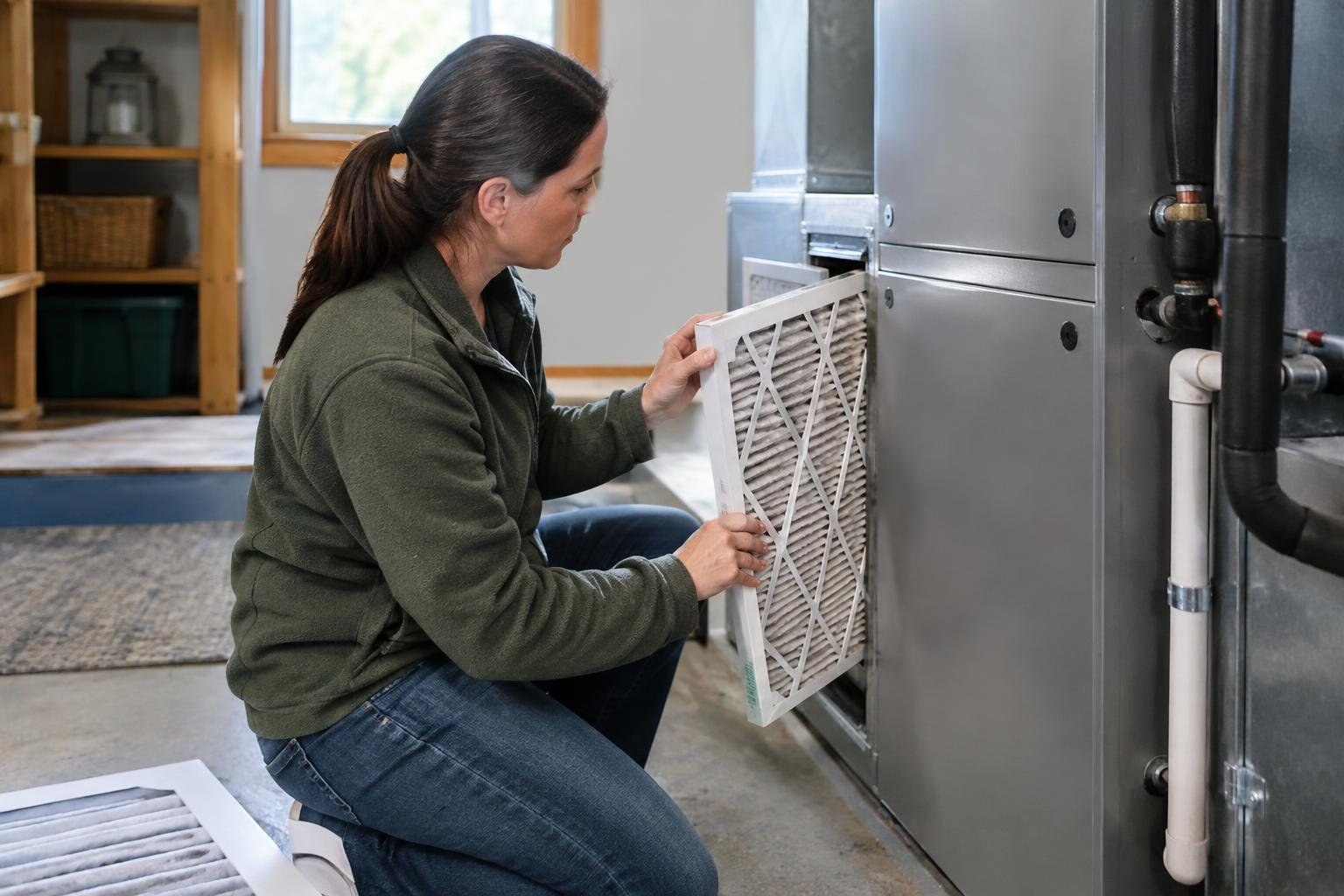
Seasonal HVAC maintenance is a plan for keeping the heating and cooling equipment ready for the periods when the residence is occupied. It can include checking or replacing the air filter, arranging a system inspection before expected heavy use, and recording any findings or recommended work. The exact scope depends on the home's equipment and the owner's concerns.
Do not assume every visit includes the same work. Ask the provider to list the tasks in writing. A filter check, equipment inspection, ductwork assessment, duct cleaning, sealing, and indoor-air-quality accessories are different things. A technician may recommend duct cleaning, sealing, or an accessory after inspecting ductwork if there is an indoor-air-quality concern; the recommendation should be tied to a finding, not treated as an automatic part of every maintenance visit.
For a home that is not occupied year-round, add practical coordination to the maintenance plan: note when the property is usually vacant, when you expect to return, and who can provide access. Ask the provider to document the date, work completed, observations, and next steps so you are not relying on memory between visits.
Signs your seasonal home's HVAC may need attention
A maintenance check may be worthwhile when the system is approaching a period of heavier use, the filter appears dirty or clogged, or the home has a comfort or indoor-air-quality concern. A clogged filter can restrict airflow and make the system work harder. That is a reason to check the filter, not proof that the equipment itself has failed.
Pay attention to concerns you can describe clearly to a technician: rooms that do not feel as comfortable as expected, a filter that becomes dirty sooner than you anticipated, or an indoor-air-quality concern that persists. Share when the issue occurs and whether it appeared after the home had been vacant. Those details can help focus an inspection, but they do not establish a cause.
Dust in ductwork is another possible indoor-air-quality concern. It does not mean that every home needs duct cleaning. Goodman recommends considering an inspection when there is a concern and notes that a technician may recommend cleaning, sealing, or an indoor-air-quality accessory after assessing the ductwork. Ask what was observed and why the suggested work addresses it.
Cost and quote considerations
There is no location-specific price range in the available evidence, so avoid treating an online figure as a reliable quote for your property. Ask providers for written, itemized estimates and compare the same scope of work. A quote should make clear whether it covers a filter task, a system inspection, ductwork assessment, or a separately recommended service.
Ask the provider to distinguish routine maintenance from repairs and optional work. If duct cleaning, sealing, or an indoor-air-quality accessory is proposed, ask what the inspection found, what the work is intended to address, and whether it is necessary now. A clear explanation helps you compare proposals without assuming that a longer list of services is better.
For useful comparisons, provide each provider with the same basic information: the equipment type if known, when the home is typically vacant, the upcoming occupancy period, and any specific concern. Request the visit fee, included tasks, and any additional charges before authorizing work. Keep the estimate with the maintenance record so future providers can see what was planned and completed.
Factors that shape the maintenance plan
The right maintenance plan depends on the equipment, the times of year it will be used, and the owner's concerns. Seasonal sources recommend different preparation for heating and cooling: one highlights checks before warm weather and cooling use, while another recommends a furnace inspection before peak heating season. Use those seasonal prompts as a starting point, then ask a technician to tailor the plan to the actual system.
Filter type and condition matter too. Maintenance sources give different filter guidance, including a 30-to-90-day replacement range and a recommendation to check filters regularly. That variation is a reason not to apply a single interval blindly. Follow the equipment and filter instructions, and ask a provider if you are unsure which filter is appropriate.
Occupancy patterns also shape the practical arrangement. A home that is vacant for long stretches may need someone to coordinate access, record what was checked, and relay recommendations before the next visit. Tell the provider whether the residence is seasonal and when you expect to use it, rather than booking a generic appointment without that context.
Compare maintenance and system options
Some maintenance is simple to monitor yourself, while other tasks call for a provider. A homeowner may be able to check an accessible filter and replace it as directed. A technician can inspect the system and assess a reported concern. Duct cleaning or sealing is a separate service, and indoor-air-quality accessories are another option that may be recommended after an inspection.
- Filter care: Useful as a regular check, but use the correct filter and follow the equipment guidance.
- Seasonal inspection: A provider visit can help assess the equipment before a period of heavier heating or cooling use.
- Ductwork service: Consider it when inspection findings or a specific concern support the recommendation, not as an automatic add-on.
- Centralized system or zoning: If comparing system arrangements in a multi-story home, ask how the existing system serves the home and whether zoning is appropriate. One source notes that a centralized system with zoning equipment may be less complicated and more cost-effective in some circumstances, but this is not a universal recommendation.
Compare options by matching the proposed work to an identified need. A basic filter task cannot substitute for an inspection of a reported equipment problem, and an accessory does not replace routine attention to the system.
What to expect and when to schedule
Arrange a cooling-focused check before the home is expected to need substantial air conditioning, and plan a heating inspection before the period of heavier furnace use if the residence has that equipment. This timing follows the seasonal maintenance guidance in the research. In a seasonal home, make the appointment early enough to discuss findings and decide on follow-up work before your arrival or the expected change in use.
The visit itself depends on the scope agreed with the provider. Confirm who will meet the technician or provide access, which equipment is included, and whether you will receive a written summary. If the inspection leads to a recommendation for duct cleaning, sealing, or an accessory, ask whether that work is included in the appointment or requires a separate estimate.
Do not assume that a calendar reminder replaces observation. Check the filter when appropriate and record its condition and replacement date. If a concern appears between visits, write down what you noticed and when. That gives the provider a clearer starting point than a general request to “check everything.”
How to choose a qualified HVAC provider
Choose a provider who will explain the scope, answer questions, and document what was found. Before booking, describe the property as a seasonal residence and ask whether the provider can coordinate access during the dates you need. If you will not be present, agree on how the provider will report findings and obtain approval before additional work.
Ask for an itemized estimate and a written account of included tasks. If the provider recommends duct cleaning, sealing, or indoor-air-quality equipment, request the inspection finding behind the recommendation and ask what alternatives are available. For a system arrangement such as zoning, ask how the proposal relates to your home's current equipment rather than assuming that a solution used elsewhere will suit your property.
Request the provider's relevant qualifications and proof of insurance, and verify any applicable local requirements through the appropriate local authority. Ask what work is covered by a warranty, what conditions apply, and whether routine maintenance is required to keep that coverage in effect. Get important answers in writing so expectations are clear if the home is unoccupied during the work.
Credentials, warranties, permits, and safety
Requirements for licenses, permits, and warranty coverage vary by location and by the work being performed. Do not assume that a particular rule applies everywhere. Ask the provider what qualifications are relevant to the proposed work and check local requirements with the responsible authority before approving work that may be regulated.
For warranty questions, read the equipment documents or contact the manufacturer or provider. Seasonal maintenance guidance notes that regular checks can help meet warranty rules, but the actual terms depend on the equipment's coverage. Ask which records to retain and whether the warranty specifies maintenance tasks or documentation.
Use caution around work you are not familiar with. Homeowner filter checks should follow the equipment instructions. Leave inspection, repair, and other unfamiliar system work to an appropriately qualified professional. If the provider proposes additional work, understand the finding, price, and scope before authorizing it.
Ways to save without cutting corners
Safe savings start with doing the basics consistently and buying only work that addresses an identified need. Check the filter as advised and replace it when needed using the filter and system guidance. A clogged filter can restrict airflow and make the system work harder, so overlooking it may undermine the purpose of maintenance.
Plan seasonal visits before periods of heavier use where possible, and provide the same information to each provider so you can compare like-for-like estimates. Keep a record of filter changes, inspections, and recommendations. This makes it easier to explain what has already been done and to question repeat proposals that do not account for prior work.
Ask for evidence before agreeing to extras. A technician may recommend duct cleaning, sealing, or an indoor-air-quality accessory after inspecting ductwork, but the recommendation should connect to a concern or finding. Do not choose a filter solely by a rating mentioned in a general article; confirm that it is suitable for your equipment. Avoid skipping a needed inspection simply to reduce the immediate bill.
Common mistakes and a practical checklist
Use this checklist to make the next service visit more useful:
- Note when the home is usually occupied and when you plan to return.
- Identify the equipment and any known maintenance instructions.
- Check the filter and record its condition and last replacement date.
- Write down comfort or indoor-air-quality concerns, including when they occur.
- Ask what the appointment includes and what is excluded.
- Request written findings and an itemized estimate for recommended work.
- Ask why any ductwork service or accessory is being proposed.
- Confirm how the provider will contact you if the home is vacant.
- Keep receipts, inspection notes, and warranty information together.
Common mistakes include treating all filters as interchangeable, assuming one replacement interval fits every property, booking after the system is already needed, and approving an add-on without understanding what problem it addresses. Another mistake is leaving no written record for the next owner, manager, or provider. A simple log can prevent repeated questions and make follow-up easier.
Coordinate HVAC with broader seasonal-home care
HVAC care is only one part of getting a seasonal home ready. If the property is in a cold-weather area, broader home-maintenance guidance also calls attention to exposed plumbing, drafty windows and doors, and roof or gutter buildup. These are separate from HVAC service, but they can affect the preparation tasks an owner needs to coordinate before leaving or returning.
Keep those responsibilities distinct when arranging providers. An HVAC technician's inspection does not automatically include plumbing winterization, window or door sealing, or roof and gutter work. Confirm which tasks each provider will perform, who has access, and how completion will be reported. Local weather and property conditions matter, so adapt the overall checklist to the home rather than applying cold-weather steps where they do not fit.
For homes with more than one system or a multi-story layout, tell the provider what areas feel uncomfortable and ask how the existing equipment serves them. A discussion of zoning or a centralized system should be specific to the home's setup. Do not assume a general comparison can settle a design decision without an assessment.
Frequently asked questions
How do you maintain HVAC in a seasonal residence?
Start with the filter: check its condition and replace it according to the filter and system guidance. Arrange a seasonal inspection before the equipment is expected to work heavily, and ask the technician to document findings and recommendations. The appropriate tasks depend on the system and property.
What are signs that a second home's HVAC system needs attention?
A clogged filter can restrict airflow and make the system work harder. Also pay attention to concerns such as uneven comfort, unusual system operation, or indoor-air-quality issues. These signs call for assessment, but they do not identify the cause by themselves.
How much does seasonal HVAC maintenance cost?
There is no supported universal price for seasonal-residence HVAC maintenance. Request an itemized quote based on the equipment, requested inspection or maintenance tasks, and any separately recommended repairs or ductwork services. Compare the same scope with each provider.
How often should I change the HVAC filter in a vacation home?
The interval depends on the filter, its condition, the system, and how it is used. Research sources describe replacement intervals ranging from 30 to 90 days and recommend checking the filter rather than assuming one schedule suits every home. Follow the equipment and filter guidance and inspect more often if conditions warrant.
What should I ask an HVAC provider before hiring them?
Ask what the visit includes, whether findings and recommendations will be documented, and how the provider handles follow-up if the home is unoccupied. Request evidence of relevant qualifications and insurance, and check local requirements rather than assuming a particular credential or permit rule applies everywhere.
People Also Ask
What HVAC maintenance should be done before opening a seasonal home?
Check the filter and arrange an inspection before the season when the system will be used heavily. Ask a qualified technician to assess the equipment and document the work and any recommendations. Filter needs and inspection tasks depend on the equipment and the home's use.
Can I do HVAC maintenance at my vacation home myself?
A filter change may be a homeowner task if the filter is accessible and the equipment guidance makes the procedure clear. Inspection, repairs, or work involving system components should be discussed with a qualified HVAC provider. Do not attempt unfamiliar or unsafe work.
What happens if I leave a dirty filter in a seasonal home's HVAC system?
A clogged filter can restrict airflow and cause the system to work harder. Replace or clean the filter as directed for that filter and system, and ask a technician if airflow or comfort problems continue.
Does every second home need duct cleaning?
Not necessarily. Duct cleaning, sealing, or indoor-air-quality accessories may be recommendations after an inspection when there is a specific concern. Ask the technician to explain the finding and why the proposed service addresses it.
How often should HVAC be serviced in a seasonal residence?
There is no single supported interval that fits every system. One source gives a 30-to-90-day filter replacement range, while other maintenance guidance emphasizes checking the filter and following equipment needs. Ask your provider to tailor a schedule to the filter and usage.
How can I compare quotes for second-home HVAC maintenance?
Ask providers to quote the same scope and separate inspection or routine tasks from proposed repairs and optional add-ons. Compare what is included, the documented findings, and the plan for service when the home is vacant.
A seasonal residence needs an HVAC plan built around how often the home is occupied, which equipment it has, and when heating or cooling will be needed. Keep filters on a clear schedule, arrange appropriate pre-season checks, and ask a technician to explain any recommended repairs or indoor-air-quality work. A written record helps you and any future provider pick up where the last visit ended. When you compare home-management options, look for support that fits the property and your schedule.
Your next step
Explore home management options and providers at HouseManagers.com.
Browse qualified providersLearn more about a Management or Concierge Plan
Last reviewed and updated October 19, 2026 by the Housemanagers.com Editorial Team.
Sources
- Seasonal HVAC Maintenance | Heating and Cooling | Goodman
- How to Choose an HVAC System for a Multi-Story Home | Polar
- The Ultimate Seasonal HVAC Maintenance Checklist for Homeowners
- Seasonal HVAC Maintenance Checklist | Constellation
- A Guide to Seasonal HVAC Maintenance for Your Home
- Home maintenance checklist: The complete guide | Pacaso
- What to Know About Seasonal HVAC Maintenance for Multi-Family Units – A&T Mechanical | Edmond HVAC