
An empty home can go unnoticed when a small leak starts, and cold weather can create a different risk: water in a pipe may freeze and cause damage when it thaws. A few simple checks before you leave can reduce avoidable problems, but the right plan depends on how long you will be away, the plumbing in your home, and the weather it may face. Start by checking water-line connections and appliances, then decide whether the water should remain on, be shut off, or be drained with professional help. Add a way to check on the property and review your insurance policy so your precautions fit your situation.
What to know before leaving an unoccupied home
Water damage prevention is a set of decisions, not just one device or one last-minute glance. The main steps are to inspect the places water enters appliances, decide whether to leave the supply on, shut off the main valve, or drain the system, and make a plan for cold weather if pipes could freeze.
For a short absence, a careful inspection and a reliable check-in plan may be appropriate. For a long absence, especially during freezing weather, the consequences of a supply-line leak or a frozen pipe can be more serious. Match precautions to your home and the time it will be empty. A property manager or qualified plumbing professional can help you assess unfamiliar systems, but you should understand what work is being done and what it does not protect against.
Signs your home needs attention before you leave
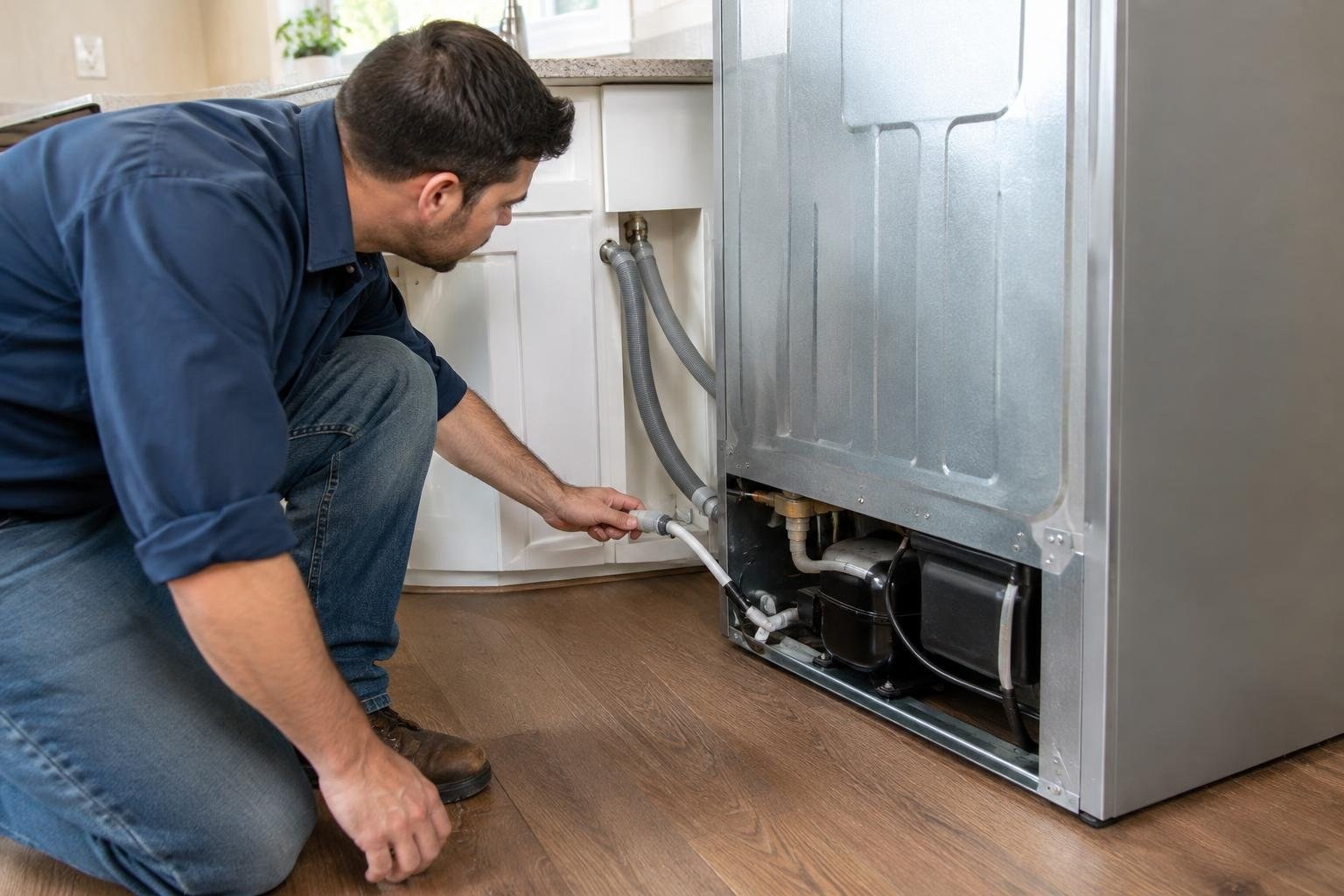
A pre-departure inspection should focus on water sources and signs of a problem. Check connections to the dishwasher, ice maker, reverse-osmosis line, and any other water-fed equipment. Look for visible drips, wet areas, or damage around connections and appliances. Check the roof for visible leaks or damage, especially before a long absence in winter.
Inspect washing machine hoses as part of routine maintenance. A source on water-damage prevention recommends upgrading hoses and replacing them regularly. Do not ignore a known leak because it seems minor: arrange an appropriate repair before leaving rather than relying on a neighbor to notice it later.
Keep a record of what you inspected, any repairs completed, and who has permission to enter the home. That makes it easier for a person checking the property to recognize a new problem.
How the prevention process works
Start with a simple process: check connections and hoses, resolve known issues, choose whether water will stay on, and prepare for the expected weather. If you keep water on, consider whether an automatic water-flow shutoff device fits your plumbing and whether anyone will respond to alerts. If the house will be empty for a long time, ask a plumbing professional whether shutting off and draining the system is suitable.
For a winter absence, one insurer recommends maintaining at least 55°F to help keep the interior of floors and wall cavities around pipes above freezing. Another source recommends at least 10°C. These are source-specific recommendations, not a universal guarantee: consider your climate, home construction, and insurance requirements, and get advice for your situation.
Winterizing may also include turning off and draining the water system and checking the roof. Do not assume that a thermostat setting alone eliminates freeze risk.
Cost and pricing considerations
There is no one-size-fits-all project price in the available guidance. Your spending depends on which steps your home needs: replacing worn hoses, repairing a known issue, installing an automatic shutoff device, arranging inspections, or having a system drained and winterized.
One source gives a broad price range for water-flow devices, but it does not establish a current price for every location or product. Get current quotes rather than treating an online figure as a reliable budget. Ask providers to separate inspection, repair, equipment, installation, and follow-up charges. Confirm whether an estimate includes the work needed to make the home ready for the full time it will be vacant.
Compare the scope and the risks addressed, not just the lowest total. Before paying for a device or service, check whether it is compatible with your home and whether the proposal explains who will respond if a warning occurs.
Factors that affect your prevention plan
Several factors change the plan. The length of the absence matters because an unattended problem may go unnoticed longer. The season matters because freezing conditions can create pipe risks. Plumbing layout, appliances connected to water, and whether a system can safely be shut off or drained also affect which measures make sense.
Think about the home’s current condition, too. A known leak or worn hose should be addressed rather than treated as a reason to buy monitoring equipment. Consider whether someone can reach the property promptly, whether an alert system has a reliable response plan, and what your insurance policy expects when the home is unoccupied.
Before choosing a service, tell the provider how long the property will be empty, what water-fed appliances it has, and whether freezing weather is possible. A plan based on those details is more useful than a generic checklist.
Options and tradeoffs: water on, shut off, or drained
Homeowners generally weigh three approaches: leave the water on with precautions, shut off the main supply, or arrange to drain and winterize the system. These choices are not interchangeable.
- Water remains on: Check supply connections, keep up with maintenance, and consider a flow-monitoring shutoff device. This approach still depends on the condition of the plumbing and a response plan.
- Main valve is shut off: This can stop new supply from entering the home, but does not repair a leak or address every source of water damage. Ask whether any equipment or household system needs water.
- System is drained or winterized: This may suit an extended cold-weather absence. Have a qualified professional explain the steps for your plumbing and how the system will be returned to service.
Choose based on the home, absence length, weather, and insurer guidance. A device can supplement a plan; it does not replace a sound inspection or needed repairs.
What to expect and when to arrange the work
Give yourself enough time to inspect, make repairs, and arrange any professional work before departure. A practical sequence is to check appliances and hoses first, resolve known problems, then confirm your water-supply and cold-weather plan. If you plan to drain or winterize, schedule a qualified professional before the home is empty rather than waiting until freezing weather arrives.
Ask when the work will be completed, whether someone needs to return to verify it, and what you should do before the plumbing is put back into use. If another person will check the home, agree on a schedule and give them clear instructions about what to inspect and how to contact you.
The sources do not set a universal visit frequency or service duration. Set a check-in plan that fits your absence and your provider’s recommendations, and make sure the person responsible can access the property.
How to choose a qualified provider
Choose a provider who can explain the work in plain language and tailor it to an unoccupied home. Ask whether the service includes checking appliance connections, inspecting visible hoses, looking for roof damage, or arranging winterization. A general home check and plumbing work are not necessarily the same service, so confirm who performs each task.
Before booking, request a written scope, itemized charges, timing, and a clear description of what is excluded. Ask how the provider documents the visit, how you will be notified about a problem, and who is responsible for urgent follow-up. If a device is proposed, ask how it works with your plumbing and what action follows an alert.
Compare providers on the specific tasks and communication plan, not just promises of protection. A provider should not claim that any single inspection, thermostat setting, or device prevents every possible water loss.
Credentials, insurance, warranties, and safety
Ask whether the provider has the appropriate qualifications for the work being proposed, especially if the plan involves plumbing changes, shutting off a system, or draining pipes. Requirements can differ by location and type of work, so verify applicable rules with local authorities or the relevant professional before authorizing a project.
Get written details about the work, any product or labor warranty, and who handles a problem discovered during the visit. Do not assume that an inspection or device guarantees insurance coverage. Review your own policy and ask your insurer how it treats an unoccupied home, what precautions are expected, and whether you need to notify them of a long absence.
Water shutoff and winterization can affect home systems. If you are unsure how to operate or restore them, ask a qualified professional rather than experimenting while the property is unattended.
Ways to reduce cost without skipping important protection
Spend first on known problems and routine checks. Replacing a worn washing-machine hose or repairing a visible leak can be more directly relevant than buying a monitoring product before addressing the cause. Check water-line connections yourself when it is safe and practical, and ask a professional to handle work beyond your skill or comfort.
Compare more than one written proposal if you are hiring someone. Make sure each estimate covers the same tasks, visit expectations, and follow-up. Ask whether a device is necessary for your situation and what it adds beyond a person checking the property. Avoid paying for features you do not understand or cannot act on.
Saving safely means not skipping a necessary repair or relying on a neighbor to perform unfamiliar plumbing work. Confirm your insurance expectations before departure, since taking reasonable precautions and documenting them can help you understand what your policy requires.
Departure checklist and mistakes to avoid
Use this checklist before locking up:
- Inspect water-line connections for the dishwasher, ice maker, and other water-fed equipment.
- Check washing-machine hoses and address signs of wear or a known leak.
- Leave clearance behind appliances where applicable; one source recommends a three- to four-inch gap behind the unit.
- Check the roof for visible leaks or damage, particularly before a long winter absence.
- Decide whether water will remain on, be shut off, or be drained with professional guidance.
- If freezing weather is possible, confirm your heating or winterization plan and check insurer guidance.
- Arrange a property check and provide instructions for reporting a problem.
- Keep written records of completed work, provider contact details, and your departure plan.
Avoid common mistakes: leaving a known leak unresolved, assuming one temperature or device is a guarantee, and shutting off or draining unfamiliar systems without understanding the consequences. Confirm the plan before you leave, not after the home is unattended.
Frequently asked questions
How do I prevent water damage in an unoccupied home?
Start by checking water-line connections and appliances, then decide whether to shut off the main water supply or arrange another suitable precaution. In freezing weather, keep the home warm enough to help protect pipes, or ask a qualified professional about draining and winterizing the system. Arrange periodic checks and review your insurance policy before leaving.
Should I shut off the water when leaving a house unoccupied?
It can reduce the chance of leaks, but shutting off the main valve does not address every risk, such as water already in the system or a roof leak. For an extended absence, ask a qualified plumbing professional whether draining the pipes or winterizing is appropriate for your home.
What temperature should I leave my house at to prevent pipes from freezing?
A cited insurer recommends keeping the home at 55°F or higher to help keep pipe areas above freezing. Recommendations can differ by home and location, so check your policy and ask a qualified local professional for guidance specific to your plumbing and weather exposure.
What should I check before leaving my home empty?
Check the connections to appliances and other water-fed equipment, including the dishwasher and ice maker. Look for visible leaks or damage, and make sure appliances have space from the wall where applicable. For a washing machine, inspect its hoses and replace them as needed.
Are automatic water shutoff devices worth considering?
A smart water-flow shutoff device may detect unusually high water use and stop the supply, depending on the device. Compare what it monitors, how it alerts you, installation needs, and whether it suits your plumbing. It is a supplement to inspections and a suitable departure plan, not a guarantee against all water damage.
How much does it cost to protect an empty home from water damage?
There is no single supported price for every home. The budget depends on the prevention steps you choose, any needed repairs or winterization, and whether you hire someone for inspections or installation. Request written, itemized estimates and compare the scope rather than relying only on the lowest total.
People Also Ask
How do you protect a vacant house from water damage?
Inspect water connections and appliances before you leave, decide whether to shut off or drain the water system, and arrange periodic property checks. In freezing conditions, keep the home warm enough to help protect pipes or seek professional winterization advice.
What temperature should I set my thermostat to when away in winter?
A cited insurer recommends setting the thermostat to at least 55°F to help keep areas around pipes above freezing. Confirm what is suitable for your home and location with your insurer or a qualified local professional.
Should I drain the pipes in a vacation home?
For long absences in cold weather, draining the pipes or winterizing the property may be appropriate. Ask a qualified plumbing professional what the process involves for your home before attempting it yourself.
Which appliance water lines should I inspect before a trip?
Check lines connected to appliances such as a dishwasher and ice maker, as well as any other water-fed equipment. Inspect washing machine hoses and replace them if they are worn or due for replacement.
Is turning off the main water valve enough to protect an empty house?
A main shutoff can stop new water from entering the home, but it is not a complete inspection or a substitute for addressing roof leaks or other existing problems. Consider the home’s systems and ask a professional whether additional steps are needed.
Does homeowners insurance cover water damage while a house is vacant?
Review your policy before a long absence and ask your insurer what precautions and notification requirements apply.
Preventing water damage in an unoccupied home starts with a deliberate plan: inspect water connections, decide whether to keep water on or shut it off, prepare for freezing conditions where relevant, and arrange regular checks. Match the plan to the length of your absence and the systems in your home, then confirm your insurance requirements before you leave. If you need help coordinating home checks or comparing service options, explore home management options and providers at HouseManagers.com.
Your next step
Explore home management options and providers at HouseManagers.com.
Browse qualified providersLearn more about a Management or Concierge Plan
Last reviewed and updated October 19, 2026 by the Housemanagers.com Editorial Team.
Sources
- How to Prevent Water Damage in Your Home and Property
- Keep Your Home Safe from Water: Best Practices to Protect Your Home While You're Away | Travelers Insurance
- 20 Tips to Prevent Water Damage in Your Home
- How to Protect Your Home from Water Damage When Leaving Town | Champion Cleaning
- 25 Ways To Protect Your Home From Winter Water Damage
- 9 ways to protect your home from water damage | Chubb
- Preventing Water Damage at Your Second Home | MetzWood