
Impact windows are windows with laminated glass and a frame assembly designed to meet specified performance requirements, including resistance to impacts and wind pressure. Miami Beach homeowners often research them as one way to protect home openings in a coastal storm environment. The right choice depends on more than glass: the exact product, its approval documents, the opening size, the frame and anchoring, and the quality of installation all matter. There is no dependable one-size-fits-all price; costs depend on the number and type of windows, the selected product, removal and finishing, access, and project requirements. Before signing, compare itemized proposals and confirm with local officials that the product and installation plan are acceptable for your property. The central takeaway is to evaluate the complete installed system, not just the term “impact window.”
What impact windows are and why homeowners consider them
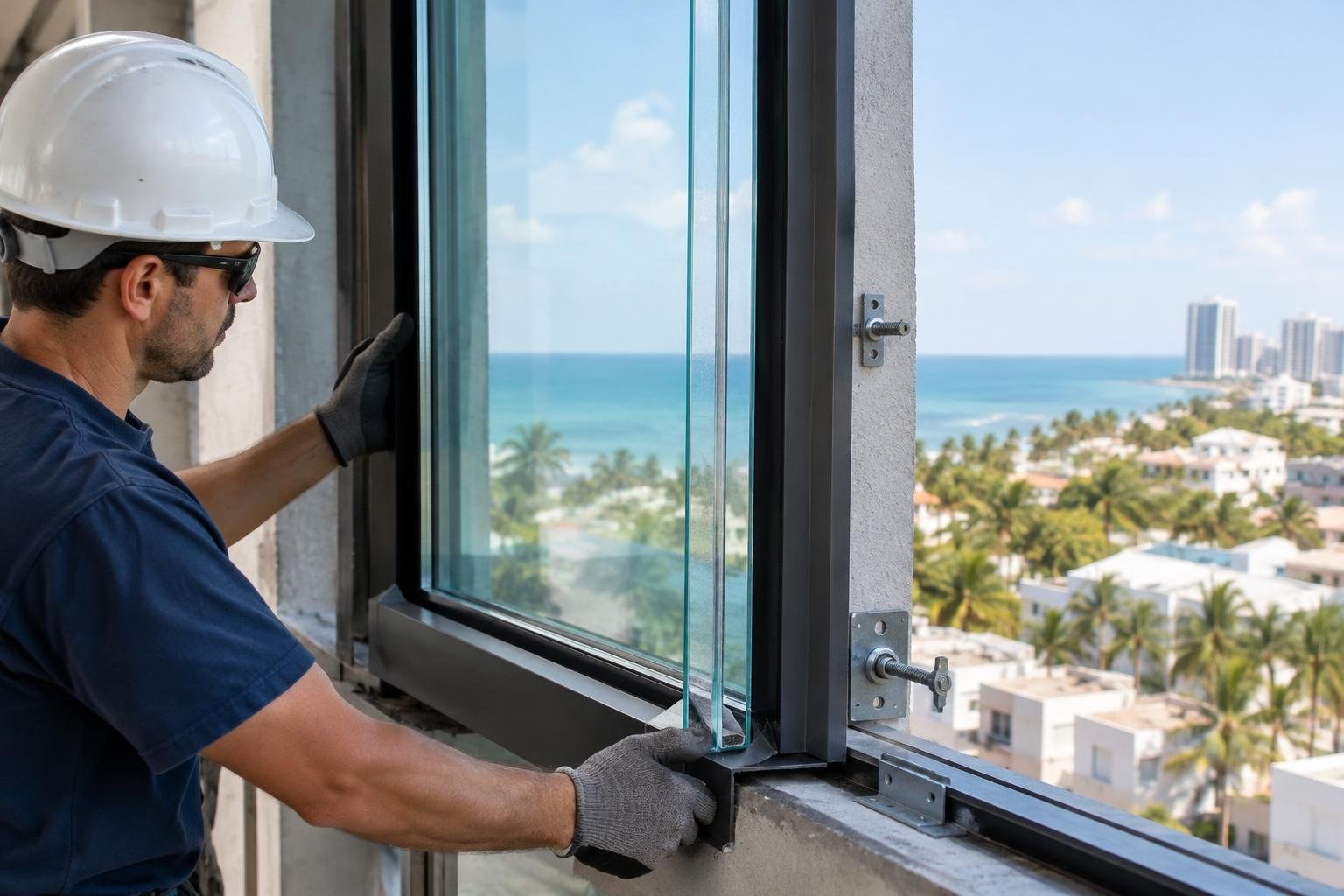
Impact windows combine glazing, a frame, and installation components into an assembly intended to meet specified performance requirements. Laminated glass contains layers joined by an interlayer; if the glass cracks, the layers are designed to remain together rather than separating like ordinary single-pane glass. Performance depends on the complete assembly and its installation, not the glass description alone.
For coastal properties, homeowners often consider these windows as one part of storm preparation. They can also be evaluated for other preferences, such as reducing outside noise or improving the home’s envelope, but ask for product-specific evidence before treating any benefit as guaranteed. A sales phrase such as “hurricane window” is not a substitute for approval documents tied to the proposed product.
Start with the practical question: which openings are being addressed, and what performance does the local project require? Then compare the product, installation plan, permit path, and warranty together.
How an impact-window assembly works
A window’s protective performance relies on several connected parts: the glass, the frame, the way the frame is secured, and the interface between the new unit and the wall. A strong-looking pane does not answer whether the full assembly is appropriate for a particular opening. Ask the provider to identify the exact manufacturer, model, configuration, and documentation being proposed.
Some product documents include a design-pressure rating. Design pressure describes a window’s ability to resist specified positive and negative pressure loads while meeting the conditions in its test or approval documentation. For example, a DP-50 rating is associated with a pressure load of 50 pounds per square foot; do not interpret that example as a recommendation for every Miami Beach home. A qualified provider should explain how the listed rating applies to the size and location of each opening.
Installation matters as much as product selection. The proposal should explain how the existing unit will be removed, how the new assembly will be anchored and sealed, and how the installer will address the surrounding opening. Ask what is included if hidden deterioration is found.
Window styles, frames, and product options
Options can include different frame materials, glass configurations, operating styles, colors, and opening sizes. Common operating styles include fixed windows, which do not open, and operable designs such as single-hung, sliding, or casement windows. Availability and performance vary by manufacturer and product line, so compare specific models rather than assuming every style has identical approvals or features.
| Choice | What to compare | Questions to ask |
|---|---|---|
| Fixed or operable | Ventilation needs, access, cleaning, and product documentation | Does the exact size and style have documentation for this opening? |
| Frame material and finish | Appearance, upkeep, corrosion resistance, and warranty | How is this frame intended to perform in the exposure at my property? |
| Glass configuration | Product approval, visible-light preferences, and manufacturer options | What exact glass build is included in the proposal? |
For a coastal home, a local provider may recommend corrosion-resistant frames, but ask for the manufacturer’s written specifications and warranty rather than relying on a generic description. A premium appearance or a longer feature list does not by itself prove that a product is a better match for your opening.
Impact-window cost: what to budget for and compare
Impact-window costs in Miami Beach vary by project, so a universal price is not a reliable planning figure. A useful estimate needs to account for the actual openings, selected products, labor, removal, disposal, access, and any required finish or repair work. Ask for an itemized written proposal and compare the same scope from each provider.
What can change the price?
- Number, size, and shape of openings: Larger or unusual units may require different products and handling.
- Product choices: Frame, glass configuration, operating style, finish, and manufacturer affect the proposal.
- Removal and disposal: Clarify whether existing-window removal and debris handling are included.
- Access and complexity: Upper floors, restricted access, and difficult work areas can change labor needs.
- Permits and project conditions: Confirm who handles applications, inspections, and any needed follow-up work.
- Repairs and finish work: Ask how the bid treats damage or deterioration discovered after removal.
How to compare bids and control cost safely
Request the same window schedule and scope from each bidder. Separate product, installation, disposal, permit handling, finish work, and exclusions. If a lower bid omits items included elsewhere, it is not an equivalent comparison. Avoid cutting cost by accepting unclear product substitutions, skipping required approvals, or leaving openings outside the agreed plan. Ask whether suitable product or finish alternatives are available, and get any change in writing.
Repair or replace: how to assess the decision
Repair may be reasonable when a problem is limited to a component and the rest of the window is sound, but impact glass or frame damage should be assessed by a qualified window professional. Replacement may be worth evaluating when a unit is damaged, repeatedly difficult to operate, leaking, or cannot be matched to the documentation needed for the project. These symptoms do not, by themselves, prove that a full replacement is necessary.
Ask the provider to distinguish glass damage, hardware issues, frame problems, failed seals, and water intrusion around the opening. Get a written explanation of whether the proposed repair restores function and whether it affects the product warranty or existing approval documentation. Compare the repair scope and warranty with the cost and disruption of replacement.
If windows are being replaced as part of a broader coastal-protection project, include other openings in the discussion. A proposal that covers only windows should state that clearly rather than implying that it provides whole-home protection.
Warning signs that an inspection may be needed
Visible damage, cracked or loose glass, a window that will not close or latch, water appearing near the frame, or a draft may be reasons to request an inspection. They can have different causes, and a symptom near a window is not proof that the window itself is the source. Ask the professional to inspect the frame, seals, wall interface, and operation before recommending a remedy.
- Cracked, chipped, or loose glass: Keep people away from the area and arrange a professional assessment. Do not assume damaged glazing retains its intended performance.
- Difficulty opening, closing, or locking: Have the hardware, alignment, and frame checked.
- Water staining or recurring dampness: Ask for the water path to be identified before covering or repainting the area.
- Corrosion or deteriorated finish: Ask whether the issue is cosmetic or affects components and operation.
- Missing product records: If planning replacement or documenting protection, request an assessment of what is installed and what documentation is available.
For an immediate safety concern, avoid handling broken glass and contact a qualified professional. For leaks, address the source rather than simply sealing a visible stain.
What to expect from estimate through installation
A typical project begins with an opening-by-opening assessment, measurements, product selection, a written scope, and confirmation of the permit path. The provider should explain what will be removed, how installation will be completed, what protection is used inside the home, how debris is handled, and what finish work is included. Exact steps depend on the property and product.
Lead time and on-site duration are different. Ordering, documentation, permitting, and scheduling can happen before installation begins; the amount of time at the home depends on the number of units, access, and project conditions. Ask for a schedule that separates these stages and identifies possible delays, such as product availability or concealed damage.
At completion, walk through each opening with the installer. Check that windows operate and lock, review the finish work, collect product and warranty documents, and ask how to report a concern. Keep the final paperwork with other home records.
How to choose a qualified impact-window provider
Impact-window installation involves heavy glass, elevated work in some homes, and a building opening that must be properly handled. A homeowner may be able to research products and compare bids, but should not treat removal and installation as a casual DIY project. Errors can damage the unit or surrounding opening and may complicate permit, inspection, or warranty matters.
Before choosing a provider, verify relevant licensing and insurance with the appropriate state or local authority, and ask who will perform the work. Request references for comparable projects and a written estimate with the product manufacturer, model, sizes, locations, removal, installation, finish work, permits, exclusions, payment schedule, and warranty terms.
Questions to ask a window provider
- What manufacturer, model, glass configuration, and frame are included?
- Can I review the approval and performance documents for each proposed product?
- How does the product documentation apply to my opening sizes and locations?
- Who confirms the permit requirements and submits the application?
- Who will install the windows, and are any subcontractors involved?
- What removal, disposal, sealing, and finish work are included?
- How will you handle concealed damage or a change in scope?
- What are the product and labor warranty terms and exclusions?
- What is the expected product lead time and installation schedule?
- What payment milestones apply, and what paperwork will I receive at completion?
Permits, product approvals, safety, and warranties
Permit and product-approval requirements depend on the address, project, and local authority. Some local contractors describe Miami-Dade and Broward as High-Velocity Hurricane Zones and refer to Miami-Dade product approvals, but provider articles are not a substitute for the current rules that apply to an individual property. Before ordering, confirm the requirements with the building department responsible for the address and ask the contractor to provide the relevant documentation.
Verify the exact approval identifier and configuration, not just a manufacturer name or a general statement that a product is “approved.” Ask whether the document covers the proposed size, operating style, installation method, and intended use. Keep permits, inspection records, product paperwork, and invoices.
Read warranties before signing. The product warranty and the installer’s labor or workmanship coverage may be separate. Check who handles claims, coverage limits, exclusions, required maintenance, registration deadlines, and whether coverage transfers to a future owner. Get promises in writing and do not assume that a warranty covers improper installation or every type of damage.
Coastal exposure and the wider protection plan
Miami Beach is a coastal setting, so it is sensible to discuss exposure, frame and hardware materials, and maintenance with a provider who can assess the property. South Florida includes communities with differing weather patterns and hurricane risks; regional advice should not be treated as a substitute for a product match to the specific site and opening.
Ask how the manufacturer describes the frame’s suitability for the exposure at your home, what maintenance it recommends, and what the warranty excludes. Review the full opening-protection plan as well: impact windows can be considered alongside impact doors, but each product needs its own appropriate documentation and installation scope.
Do not assume that impact windows guarantee lower energy bills, insurance savings, or a particular resale return. If efficiency or insurance is part of the decision, ask for product-specific evidence and check directly with the utility, insurer, or other relevant organization before counting on savings.
Impact windows versus shutters
Impact windows and shutters both appear in storm-protection discussions, but they are not the same product. Impact windows are installed as window assemblies; shutters are a separate protective approach. A homeowner comparing them should look at local requirements, the home’s existing openings, product approvals, installation, operation, maintenance, and warranty rather than relying on a blanket claim that one option is always superior.
| Consideration | Impact windows | Shutters |
|---|---|---|
| How protection is used | Permanent window assembly | Separate covering or system used as designed |
| Project questions | Product, glass, frame, anchoring, and installation documentation | System type, storage or operation, attachment, and documentation |
| Decision factors | Opening-by-opening product fit and project scope | How the system is operated and maintained by the household |
Ask providers to quote the alternatives that are acceptable for your property, if more than one approach is available. Compare total installed scope and what you will need to do before a storm. A window project also should not be represented as protecting doors or other openings unless those are included.
Common mistakes and contractor red flags
Common mistakes are often problems of scope or verification, rather than choosing the wrong color. Avoid these pitfalls:
- Choosing by the phrase “impact-rated” without reviewing product-specific documents.
- Comparing bids with different window counts, products, removal, or finish work.
- Assuming a rating or approval applies to every size and style from a manufacturer.
- Leaving doors or other openings out of a project while assuming the whole home is protected.
- Not confirming permit and inspection responsibilities before work starts.
- Accepting a verbal promise about approval, warranty, or included repairs.
- Paying attention to the glass but not the frame, anchoring, sealing, and installation.
- Ignoring exclusions for concealed damage, disposal, or interior and exterior finish work.
- Rushing the decision because of a storm forecast or pressure from a salesperson.
- Counting on energy, insurance, or resale savings without confirming them independently.
Pause if a contractor will not identify the exact product, provide an itemized written scope, or explain who is responsible for permits. A notably low proposal deserves careful review for omissions before it is accepted.
Related projects to evaluate before replacing windows
Window replacement can overlap with other work around an opening. Consider the related work before the installation date, when sequencing can be discussed and the written scope clarified.
- Impact doors: Related because they are also openings in the building envelope. Evaluate them alongside the window plan if you want a complete opening inventory. Bundling may simplify scheduling, but compare separate line items; determine whether door work must happen before or after window work based on the contractor’s installation and finish plan.
- Exterior trim and painting: Removal can affect finishes around a window. Ask whether repairs and painting are included, and coordinate finish work after installation and inspection when the scope requires it.
- Water-intrusion repairs: Stains or dampness should be investigated before new units conceal the area. Identify and address the source before or during replacement, as appropriate, rather than treating appearance alone.
- Other storm-protection work: Evaluate other openings or protective systems at the same planning stage. Confirm each item’s requirements and scope rather than assuming window documentation covers other products.
Bundling is not automatically cheaper. It can reduce repeat scheduling or disruption, but only written, itemized proposals can show whether combined work changes the price or responsibilities.
Are impact windows worth it?
Whether impact windows are worth it depends on the home, the condition and documentation of existing windows, the protection approach accepted for the property, the price of the installed project, and how long the owner expects to stay. They may appeal to homeowners seeking permanently installed impact glazing, but product claims should be weighed against written performance documentation and installation details.
Potential drawbacks include a substantial project commitment, disruption during replacement, and the need to evaluate each opening and product carefully. Do not assume a particular energy-bill reduction, insurance discount, or increase in home value. Confirm any potential financial benefit with the relevant utility, insurer, or qualified real-estate professional.
A sound decision is to compare repair, replacement, and any locally acceptable alternatives; obtain multiple bids with equivalent scope; and verify permits and documentation. If the evidence and project fit your priorities and budget, proceed with a written agreement. If not, ask a qualified professional what other options are available for your home.
Final homeowner checklist
- List the windows and other openings you want assessed.
- Document visible damage, operating problems, or signs of water intrusion.
- Ask whether repair is suitable, and request the reason if replacement is recommended.
- Compare exact products, sizes, styles, frame details, and approval documents.
- Confirm local permit and inspection requirements with the responsible building department.
- Get multiple itemized written proposals for the same scope.
- Verify provider credentials, insurance, references, and who will perform the work.
- Review payment milestones, exclusions, change-order terms, and product and labor warranties.
- Plan related work, access, product lead time, installation, and finish work.
- At completion, test operation and locks, review finish work, and keep permits and product records.
Frequently asked questions
What are impact windows?
Impact windows use laminated glass designed to remain together when struck, while the complete window assembly is evaluated for specified performance. They can be one way to protect openings, but suitability depends on the exact product, installation, and local requirements. Ask for documentation for the specific window and confirm the project scope with your building department or qualified professional.
How much do impact windows cost in Miami Beach?
There is no responsible universal price to quote without details about the openings, chosen products, access, removal, finish work, and installation scope. Request itemized written proposals that identify the product and included work. Compare the same opening count and scope across bids, and ask which items could change the final price.
How do I know if an impact window is approved for my home?
Do not assume a window is approved for your home because a sales brochure calls it impact-resistant. Ask the provider for the exact product approval and performance documents, then confirm with the local permitting authority that the documents apply to your address, opening, and proposed installation. Requirements can depend on the site and project.
Do impact windows protect the whole house during a hurricane?
Impact glass can be a useful part of a storm-protection plan, but it does not mean every part of a house is protected. Doors and other openings, the frame, the installation, and the surrounding building components matter too. Have a qualified provider identify what the proposal protects and what it does not include.
Are impact windows better than hurricane shutters?
Impact windows and shutters are different approaches. Windows are permanently installed and do not require a homeowner to put up a separate covering before a storm, while shutters are a separate protective system that must be installed or closed as designed. Compare the products, approval documents, installation, upkeep, and local requirements for your home before choosing.
How long does impact window installation take?
The time depends on the number and type of windows, product availability, permitting, access, and whether repairs or finish work are needed. Ask the contractor to separate the expected lead time from the on-site installation period, and to explain how weather or unexpected conditions could affect the schedule.
What should an impact-window estimate include?
Ask for a written proposal identifying the manufacturer and exact product, product approvals, window sizes and locations, removal and disposal, installation method, permit responsibility, finish work, schedule, payment milestones, and warranty terms. Verify the provider’s current credentials and insurance, and check the proposed scope with the permitting authority where needed.
People Also Ask
How do impact windows work?
Impact windows use laminated glass that is designed to stay together when damaged, and the full window assembly is evaluated for defined performance. Ask providers for the approval and performance documents for the exact product they propose. Confirm that the product and installation are appropriate for your home and project before ordering.
Are impact windows required in Miami Beach?
The product alone does not establish whether a home meets local requirements. Rules and accepted documentation can vary by project and location. Check with the building department responsible for the property and ask the contractor to explain which product approvals and permit documents apply to the proposed work.
What does a DP rating mean for impact windows?
A DP rating describes a product’s design-pressure performance, including pressure in positive and negative directions. For example, DP-50 is associated with a pressure load of 50 pounds per square foot, but that number alone is not a complete selection guide. Ask a qualified provider to match the product’s documentation to the opening and project requirements.
What should I look for when comparing impact windows?
Compare the exact frame and glass specifications, product approvals, performance documents, warranty terms, and installation scope. For a coastal home, also ask how the proposed frame and hardware are suited to the exposure at your property. Do not select solely by appearance or a broad marketing claim.
Do impact windows and impact doors need to be considered together?
Impact windows may be part of an overall approach to storm protection, but the project should identify all openings and products included. Ask whether doors or other openings are part of the proposal, and confirm that the complete plan meets the requirements that apply to your home.
How can I compare impact-window quotes?
Get multiple itemized bids with the same number of openings and a clearly stated product and installation scope. Ask each provider to list removal, disposal, permitting, finish work, and any exclusions separately. This makes it easier to compare actual project scope rather than headline prices.
Impact windows can be a practical part of a coastal home’s storm-protection plan, but the product label alone does not tell you whether a particular window is right for your home. Compare the approval documentation and performance specifications for the exact product, make sure the installation scope addresses every opening you intend to protect, and verify local permit requirements before work begins. Ask more than one qualified provider for itemized proposals, and weigh the full project scope, warranty, and installation details alongside price.
Your next step
Explore home management options and providers at HouseManagers.com.
Last reviewed and updated November 2, 2026 by the Housemanagers.com Editorial Team.
Sources
- 9 Reasons to Install Impact Windows in Beachfront Homes
- The Ultimate Guide to Impact Windows in South Florida
- Impact Windows Miami: Complete Homeowner's Guide [2026] | Impact Doors Miami
- Are Impact Windows Required in Florida? 2026 Miami | Bigfoot Windows & Roofing
- Are Impact Windows Required in Florida? (By County & Zone) | Armor Pro Windows & Doors
- Impact Windows in Miami: Hurricane Protection Guide | BWR
- Impact Resistant Windows in Miami | tiswcorp
- Miami Impact Windows: A Coastal Homeowner’s Best Defense – patriotwindowsdoors
- Hurricane Windows in Miami: A Complete Homeowner Buying Guide