
Hurricane windows, also called impact windows, are replacement windows selected for use in storm-prone areas. For Miami homeowners, choosing them means more than picking a frame style: the proposed product, its approval, its configuration for each opening, and the installation all need careful review. There is no dependable one-price-fits-all estimate. The number and size of openings, product choices, existing conditions, and project scope affect the quote. Start by checking the needs of your home, then compare itemized written proposals and verify applicable requirements with your local building department or a qualified professional. The main takeaway: an approved product is only part of a successful project; the installation and documentation matter too.
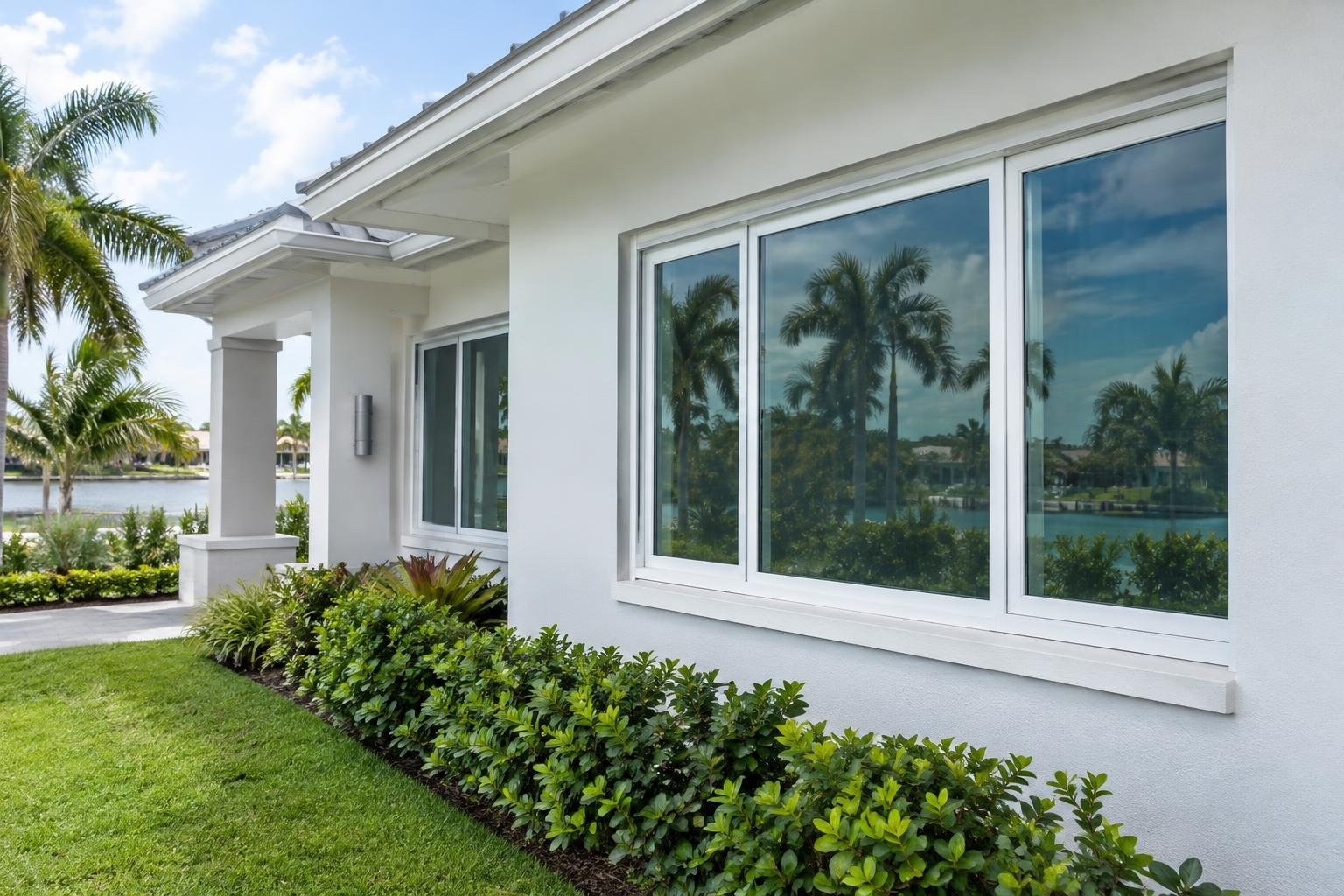
What Hurricane Windows Are and Why Miami Homeowners Consider Them
Hurricane windows, commonly called impact windows, are windows selected for homes in areas exposed to severe storms. A homeowner considering replacement should evaluate the window as part of a complete opening system: the product, its size and configuration, the way it is installed, and whether the proposal meets requirements for the property.
Storm protection is the main reason to consider the project, but it may also be an opportunity to review appearance, operation, glass performance, and the condition of existing windows. In South Florida, homeowners may encounter products with Miami-Dade Notice of Acceptance (NOA) approvals. An approval should be checked for the exact product and configuration being proposed, rather than treated as a general endorsement of every window from a manufacturer.
Start by making an opening-by-opening list. Note visible damage, trouble operating a window, fogging between panes, and any desired change in style. That record gives contractors a useful basis for inspection and makes proposals easier to compare.
How a Hurricane-Window Project Works
A window project has two connected parts: selecting a product for an opening and installing it according to the applicable product and project requirements. Homeowners should ask contractors to explain both parts in plain English.
When comparing proposals, look for the manufacturer and product identification, the proposed size and configuration for each opening, approval information, glass options, and an explanation of the installation approach. Design Pressure (DP) is a term homeowners may see in product information. Ask the contractor to explain what the listed value means for the specific opening and how it was selected; do not use one number alone to decide whether a window is suitable.
The work can also involve removal of existing windows, preparation of openings, installation, finishing, cleanup, and final documentation. Ask which of those tasks are included and who is responsible for permits or inspections if they apply. A clear scope helps prevent disagreements about unfinished trim, disposal, or other work around the opening.
Window Styles, Glass Options, and Product Approvals
Impact windows are available in multiple operating styles, including single-hung, double-hung, casement, and sliding designs. Style affects how a window opens and looks, but it does not by itself tell you whether a specific product is appropriate for an opening. Availability and approved configurations can differ, so confirm the proposed model and size.
| Option | What to compare |
|---|---|
| Single-hung | Appearance, operation, cleaning access, and approved sizes for the opening. |
| Double-hung | How both sections operate, fit with the home's look, and product availability. |
| Casement | How the sash opens, clearance around the window, and the product's approved configuration. |
| Sliding | Ease of operation, opening dimensions, and applicable product approval. |
Some products can also be configured with Low-E glass, a glass treatment discussed as an energy-efficiency option. Ask for the actual specification and compare it with your priorities. Do not assume that a style or glass feature guarantees a particular level of storm protection or energy savings.
Factors That Affect the Project
The size and number of openings, their accessibility, the selected product and glass configuration, and the condition of the openings can all affect the estimate. Removal and disposal, trim and finish work, permits or inspections where applicable, and other work identified during inspection can also change the project scope.
What can affect the estimate?
- Number, dimensions, shape, and accessibility of the openings.
- Selected style, product, glass configuration, and applicable approval.
- Removal and disposal of existing windows.
- Condition of the openings and any additional work identified during inspection.
- Interior or exterior trim, finishing, and other work included in the scope.
- Permits, inspections, scheduling, and project complexity where applicable.
Ask each bidder to identify what is included, excluded, and priced as an allowance or possible extra. A lower total may omit work that another proposal includes. Compare the product and configuration for every opening as well as labor, cleanup, warranty, and responsibility for approvals.
Ways to control cost safely
Prepare an opening list, request comparable written scopes, and ask whether choosing among available styles or configurations changes the estimate. If other exterior work is planned, ask whether coordinating it would reduce repeat setup or disruption. Do not save money by skipping required approvals, accepting an unclear product substitution, or hiring someone whose credentials and insurance you have not checked. Product availability, permitting, project complexity, and weather can also affect the schedule, so ask for milestone dates and a plan for communicating delays.
Repair or Replace Existing Windows?
Repair may be reasonable when a limited problem can be identified and addressed without compromising the rest of the window. Replacement deserves consideration when windows have recurring problems, visible damage, poor operation, or a failed insulated-glass seal that leaves fog between panes. A window professional should diagnose the cause rather than assume that every symptom requires a full replacement.
Ask whether the problem concerns the glass, frame, hardware, surrounding opening, or prior installation. Request a written repair scope and compare it with replacement on the same opening. Consider the window's condition, the likelihood of repeat work, the available product configuration, project disruption, and any applicable approval or code requirements.
Fogging between panes can indicate a failed seal in an insulated glass unit. One supplied buying guide cautions that such units can be difficult to repair; get a project-specific assessment before deciding. Avoid a blanket claim that replacement always pays for itself or that every cloudy window must be replaced.
Signs You May Need Window Service or Replacement
Use these symptoms as reasons to arrange an assessment, not as a diagnosis:
- Fog or moisture between panes: ask whether the insulated-glass seal or another part of the window is involved.
- Visible damage: have a qualified professional evaluate the glass, frame, and opening.
- Difficulty opening or closing: ask whether the cause is a window component, installation issue, or a condition around the opening.
- Recurring window problems: compare the cost and scope of another repair with a replacement proposal.
- Storm-protection concerns: request an opening-by-opening review of the existing products and proposed alternatives.
If a storm is approaching, do not treat a product order, incomplete installation, or an unverified label as proof that the home is protected. Ask the installer for a realistic schedule and discuss any work that may remain unfinished if weather becomes a concern.
What to Expect: Estimates, Installation, and Timing
A typical project begins with an inspection and measurements, followed by product selection and a written estimate. Depending on the project and local rules, permitting or other approvals may need to be addressed before work begins. The contractor should explain the sequence and identify what could affect timing.
- Assess: review openings, operation, visible damage, and related trim or exterior conditions.
- Specify: agree on the product, style, glass option, dimensions, and approval information for each opening.
- Document: finalize the written scope, payment terms, schedule, responsibilities, and warranty information.
- Prepare and install: confirm access, protection of nearby areas, removal, installation, and finishing responsibilities.
- Review: walk through completed work, ask about operation and care, and collect permit or product documents that apply.
There is no dependable schedule for every home. Product availability, number of openings, project complexity, permitting, and weather can affect the calendar. A Miami-area contractor source specifically warns that a project started in April could remain incomplete if an early-season storm threatens. Ask for milestone dates and a plan for communicating delays.
How to Choose a Qualified Hurricane-Window Contractor
Choose a provider who can explain the proposed product and installation without relying on broad promises. Verify the contractor's license and insurance with the relevant agencies, and confirm who will obtain permits or arrange inspections when required. The supplied sources emphasize using licensed professionals and following applicable local requirements.
Request a written, opening-by-opening proposal. It should identify the product, configuration and approval details; removal and disposal; installation and finish work; possible exclusions; payment schedule; project timing; warranty coverage; and the contractor responsible for each task. Ask for references for comparable local projects and clarify whether subcontractors will be used.
Questions to ask before signing
- What exact product and configuration are you proposing for each opening?
- Where can I review the approval information for those products?
- How will you confirm that the proposal fits my home's openings and applicable requirements?
- What work is included for removal, installation, trim, cleanup, and disposal?
- What conditions could lead to additional charges?
- Who handles permits and inspections if needed?
- Who performs the installation, and will subcontractors be involved?
- What license and insurance information can I verify?
- What is the expected schedule, including product ordering?
- What product and workmanship warranties apply, and what do they exclude?
- What records will I receive after completion?
- How do you handle a change in scope, a delay, or a dispute?
Permits, Product Approvals, Safety, and Warranties
Hurricane-window requirements and permitting can vary by jurisdiction and project. Before signing, ask the contractor what approvals or inspections apply and verify the answer with the local building department when needed. Do not assume that a product's approval automatically covers every installation detail or every opening in a home.
Ask for product and workmanship warranty documents, including coverage limits, exclusions, registration requirements, transferability, and maintenance expectations. Get any promised work or warranty terms in writing. Keep the estimate, approval documents, permits or inspection records where applicable, invoices, and product information together.
Take storm and installation concerns seriously, but avoid relying on absolute claims that a window can withstand every condition. Product suitability depends on the stated configuration and the project's requirements. For questions about insurance mitigation credits, contact the insurer and ask what documentation it requires; do not count on a credit until the insurer confirms it.
Comparing Window Options and Tradeoffs
Compare impact windows with any other storm-protection approach being considered for your home by asking a qualified local professional to assess the openings and applicable requirements. The materials supplied for this guide do not establish that one approach is always less expensive, longer-lasting, or suitable for every property. Ask for a direct comparison of initial scope, operation, preparation, storage or upkeep if relevant, and what happens when severe weather is forecast.
Within impact-window options, compare product approvals, frame and glass specifications, operating style, available dimensions, and installation scope. Miami-Dade NOA is one approval name that appears in South Florida product discussions, while Design Pressure may appear in specifications. Ask the contractor to show how the selected product information applies to each opening instead of comparing labels without context.
For energy-related choices, ask whether the proposed glass is available with Low-E and request the specification. Energy performance and possible savings depend on more than a product label; avoid accepting a guaranteed bill reduction without evidence specific to your home.
Related Projects to Consider Before Replacing Windows
Window replacement can connect to work on exterior trim, siding, doors, painting, and energy improvements. The relationship depends on the home's construction and the specific opening, so ask the installer to identify adjacent work that could be affected before the project begins.
- Trim and painting: evaluate when the estimate identifies removal or finish work. Agree on who repairs, replaces, and paints affected areas.
- Siding or exterior repairs: inspect during planning if work around an opening could be disturbed. Coordinate sequencing with the window installer and siding contractor.
- Exterior doors: consider them at the same time if they are also part of the home's storm-protection plan. Ask whether coordinating the work reduces repeat disruption, rather than assuming a discount.
- Energy upgrades: discuss Low-E glass and the home's other efficiency needs together. Ask for product specifications rather than assumed savings.
- Insurance review: contact the insurer after deciding what work is planned and ask what proof is needed to evaluate any mitigation credit.
When projects are bundled, agree on which work comes first, how the trades coordinate, and who is responsible for damage or unfinished transitions. Bundling may simplify planning, but it does not automatically lower the total cost.
Common Mistakes and Contractor Red Flags
Product choice is only one contributor to the finished result. A technically appropriate product can still lead to a disappointing project if the scope, measurements, installation, or follow-up are rushed. Ask how the contractor protects the work area, confirms each opening, follows product requirements, and checks the finished windows.
Common mistakes include choosing only the lowest bid; comparing estimates with different products or exclusions; assuming every window in a product line is approved for every opening; overlooking trim, disposal, and cleanup; treating fogging as proof that every window must be replaced; expecting an insurance discount without insurer confirmation; and waiting until storm-season pressure makes careful comparison difficult.
Red flags include no written scope, unclear product identification, pressure to sign immediately, unverified license or insurance, vague warranty promises, refusal to explain permits, or a bid that is unusually low without a clear explanation of what is omitted. Do not pay or authorize work based only on verbal assurances. Ask for revisions in writing before proceeding.
Is Replacing Windows Worth It?
Whether hurricane windows are worthwhile depends on the condition of the existing windows, the home's storm-protection needs, the total project scope, and how long you expect to stay. A replacement may also let you consider operating style, appearance, or Low-E glass, but no product should be treated as a guaranteed return on investment or insurance savings.
Balance potential benefits against the project's cost, disruption, maintenance, and the need to meet requirements for the property. If the main issue is limited to one damaged or fogged unit, compare repair and replacement for that opening before assuming a whole-home project is necessary. If many windows need attention, ask for both a comprehensive scope and any reasonable phased alternatives.
Get written answers from the contractor about product, installation, and warranty questions, and ask the insurer directly about any possible mitigation credit. A careful comparison is more useful than a sales claim that the project will pay for itself.
Final Homeowner Checklist
Before signing, use this checklist to make sure the decision and the written scope are clear:
- List the openings to assess and note damage, fogging, and operating problems.
- Compare repair with replacement where a professional identifies a limited problem.
- Choose a style and glass option based on the opening and your priorities.
- Confirm product identification, configuration, and approval information for each opening.
- Request itemized estimates with included work, exclusions, and potential extra charges.
- Verify license and insurance, and check references for comparable work.
- Confirm permit and inspection responsibilities with the contractor and local authority where applicable.
- Review payment terms, schedule, product and workmanship warranties, and change-order process.
- Identify related trim, siding, door, or finish work and agree on sequencing.
- At completion, review operation and finish, resolve outstanding items, and collect applicable documentation.
Keep a copy of the signed agreement, product details, warranty papers, invoices, and project records. Contact your insurer to ask whether it needs particular documentation for a mitigation review.
Sources and Further Reading
Source reading used to inform this guide:
- Impact Windows in Miami: Hurricane Protection Guide
- The Complete Hurricane Windows Buyers Guide
- Hurricane Impact Windows: Miami Home Protection Guide
- Hurricane Impact Windows Buying Guide
- Hurricane Windows of Miami
- Ultimate Guide to Hurricane-Resistant Windows in Miami
- Miami-Dade Hurricane Windows Guide
- Guide to Miami-Dade-Approved Hurricane Impact Windows
For current project requirements, verify information with the relevant local building department, product documentation, qualified professionals, and your insurer.
Frequently asked questions
What are hurricane windows?
Hurricane windows, often called impact windows, are designed and tested for use in storm-prone areas. When choosing them, confirm that the exact product, size, and configuration are approved for your project and that the installation proposal accounts for local requirements. A product label alone does not establish that every window in a home is suitable.
How much do hurricane windows cost in Miami?
There is no reliable single price for a whole-home project without knowing the number and sizes of openings, selected products, existing conditions, and installation scope. Ask for an itemized, written estimate that identifies each opening, product configuration, removal and disposal, finish work, permits, and possible extra charges. Compare complete scopes rather than the headline total.
What does Miami-Dade NOA mean for hurricane windows?
Ask the contractor to identify the product approval and the exact configuration proposed for each opening. Miami-Dade Notice of Acceptance (NOA) is one approval homeowners may encounter in South Florida. Confirm that the approval applies to the selected product and project, and check applicable requirements with the local building department or a qualified professional.
What styles of hurricane windows are available?
Impact-rated windows are available in styles such as single-hung, double-hung, casement, and sliding. Compare how each style operates, its appearance, ventilation needs, dimensions, and available approved configurations. The right choice depends on the opening and the product approval, not just the style name.
Can hurricane windows improve energy efficiency?
Some impact-window products can be configured with low-emissivity, or Low-E, glass. Ask the supplier to explain the proposed glass specification and how it relates to the home's climate and cooling needs. Do not assume a product will produce a particular utility-bill reduction; performance depends on the product, home, installation, and use.
How long does it take to install hurricane windows?
Ask for a written project schedule that covers measurement, product ordering, permits or approvals where required, installation, inspections, and final documentation. Lead times and installation duration depend on the number and type of openings, product availability, site conditions, and permitting. Do not rely on a verbal completion promise, especially near storm season.
Will hurricane windows lower my homeowners insurance?
Not always. Ask your insurance agent whether your specific window project qualifies for a mitigation credit and what documentation the insurer requires. A contractor's promise of lower premiums is not a substitute for written confirmation from your insurer, and any credit depends on the insurer's rules and your policy.
What if my window glass is fogging between the panes?
Fog between panes can be a sign of a failed seal in an insulated glass unit. Ask a qualified window professional to assess the glass, frame, and installation, and explain whether repair is possible. Compare the repair scope with replacement before deciding.
Do hurricane windows protect a home if they are not installed correctly?
Impact windows are not a substitute for checking the full opening, installation, and applicable building requirements. Ask a qualified professional to assess your home's windows and explain the approved solution for each opening. If a storm is approaching, do not assume unfinished work or an unverified product provides protection.
Should I replace siding or doors at the same time as hurricane windows?
Potentially. Replacing windows may involve adjacent trim, finishes, siding, or doors, depending on the home's construction and project scope. Have the contractor identify related work before signing and explain whether combining it with window installation changes cost, access, or scheduling. Agree in writing on which trades handle each part.
People Also Ask
What is Design Pressure on a hurricane window?
Design Pressure is a value that may appear in product information. Ask the contractor to explain how it relates to the specific opening and why that product configuration was selected. Do not use the number alone to decide whether a window is suitable.
How can I compare hurricane-window estimates fairly?
Compare proposals opening by opening. Check that each identifies the product and configuration, approval information, removal and disposal, installation and finish work, exclusions, possible extra charges, warranty, and permit responsibilities. A lower total may leave out work included in another bid.
What documents should I ask a window contractor for before signing?
Ask the provider to identify the exact product and configuration for each opening and show the applicable approval information. Confirm who handles permits and inspections, what installation and finish work is included, and which product and workmanship warranties apply. Verify license and insurance with the relevant agencies.
What can delay a hurricane-window installation project?
Product availability, the number of openings, project complexity, permitting, and weather can affect timing. Ask for milestone dates, including product ordering and installation, and agree on how the contractor will communicate delays. Avoid starting on the assumption that work will finish before storm-season concerns arise.
Does fog between window panes mean I need a new window?
Fog between panes can indicate a failed seal in an insulated glass unit, but it does not by itself determine whether the whole window needs replacement. Ask a window professional to assess the glass, frame, and installation, then compare a written repair scope with replacement for that opening.
What should I check before choosing Low-E impact windows?
Some products can be configured with Low-E glass. Ask for the actual glass specification and compare it with your priorities; do not assume a feature guarantees a particular energy saving. Ask your insurer directly whether the project may qualify for a mitigation credit and what records it requires.
Hurricane windows are a significant home project, and the product is only one part of the decision. Compare complete written proposals, verify that the exact window configuration and installation plan meet requirements for your property, and ask who will handle permits, inspections, and final documentation. Consider energy performance and related exterior work, but confirm any possible insurance benefit directly with your insurer. Explore home management options and providers at HouseManagers.com.
Your next step
Explore home management options and providers at HouseManagers.com.
Browse qualified providersLearn more about a Management or Concierge Plan
Last reviewed and updated October 12, 2026 by the Housemanagers.com Editorial Team.
Sources
- Impact Windows in Miami: Hurricane Protection Guide | BWR
- The Complete Hurricane Windows Buyers Guide – GM Door Window & Screen
- Hurricane Impact Windows: Miami Home Protection Guide
- Hurricane Impact Windows Buying Guide: What South Florida Homeowners Need to Know
- Hurricane Windows of Miami | Best Prices in Town | Call Us Now
- Ultimate Guide to Hurricane-Resistant Windows in Miami – patriotwindowsdoors
- Miami Dade Hurricane Windows Guide for FL Homeowners
- Your Complete Guide to buying Miami Dade approved Hurricane Impact Windows and Doors –